Upcoming Meetings and Events
- 10 am - 4 pm
- Carpenter Farms, Adrian MI
- This is the annual WLEB Advisory Group meeting by invitation only.
Past Meetings and Events
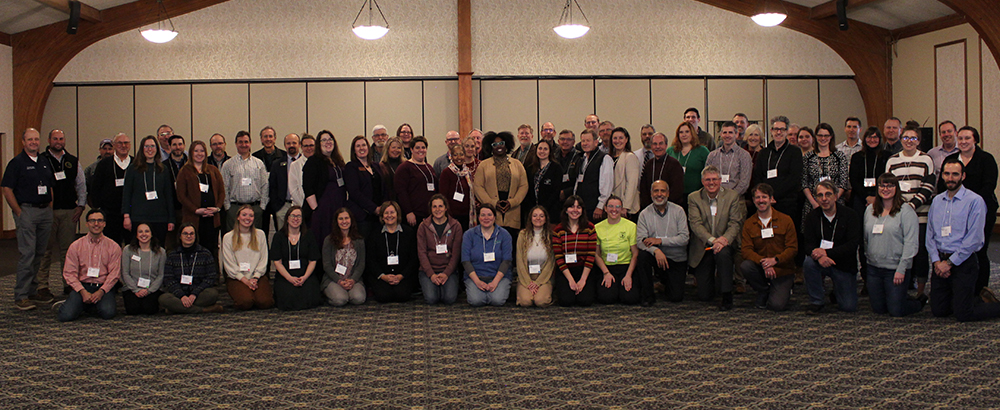
Michigan's 2026 State of the Western Lake Erie Basin (WLEB) Conference focused on tri-state progress, ongoing project updates, and community resilience in reducing nutrient pollution in Michigan’s watersheds that drain into the Western Basin of Lake Erie. The conference included a mix of plenary, concurrent sessions, and posters where attendees learned about:
- DAP Updates from EPA, Michigan, Ohio, and Indiana
- Performance-based conservation adoption program
- 319 watershed management plans
- Seneca State Game Area
- Nutrient reducing wetlands
- Ferric chloride phosphorus reduction in wastewater
- Edge-of-field engineering practices
- Crop yield and water quality modeling
- MDARD, EGLE, and DNR funded DAP project updates
Join us for an in-depth look at the first year of the Expanded Water Quality Monitoring Project in Michigan’s Western Lake Erie Basin (WLEB). With just one year of data - collected largely during drought conditions - speakers will orient participants to upstream variability across the five priority sub-watersheds and explore key insights from continuous sensors, grab samples, and subsurface tile drain monitoring. The session will highlight major rainfall events (each over one inch) and examine how those events moved through the system versus tile drain outlets, drawing on case studies from two contrasting watersheds.
Join SEMCOG for a webinar introducing the Flooding and Resilience Plan for Southeast Michigan. This plan builds on SEMCOG’s resilience work and accelerates implementation of equitable, nature-based strategies across the region. SEMCOG will showcase tools and resources that support local planning efforts and how these tools can be leveraged to address flooding challenges, support water quality, and integrate nature-based solutions.
Join us for an exclusive webinar showcasing the user interface of the new MDARD funded Performance-based Conservation Program and its integration with yield stability maps developed by Bruno Basso at the Center for Regenerative Agriculture. The program uses a Pay-for-Performance approach aimed at reducing nutrient loads into the Western Lake Erie Basin.
Learn how to protect land and support the next generation of Michigan farmers in this webinar featuring Legacy Land Conservancy and MiFarmLink. Discover practical conservation tools, easement options, and farmland transition strategies that safeguard water resources and keep farms thriving. Whether you’re a landowner or an aspiring grower, this session offers real solutions for your land’s future.
As a farmer, knowing how to manage environmental regulations and programs can seem like a maze: what actions are required? What are my options? Do I need a permit for that? Find a path to solutions with this webinar covering Michigan’s on-farm environmental regulations, Generally Accepted Agricultural and Management Practices, and resources to help from an environmental specialist who works exclusively with farmers helping them navigate the world of environmental performance and compliance.
Excess phosphorus pollution in the Western Lake Erie Basin (WLEB) continues to drive harmful algal blooms, which pose significant risks to the ecosystem and human health. Luckily, numerous nutrient reduction projects are already underway across the watershed. A team of 2025 Dow Sustainability Fellows—five University of Michigan graduate students—designed an online directory including extensive information about all nutrient reduction projects within the WLEB. This new digital tool allows for stakeholders, educators, and community members to access information on these projects. The goal of this tool is to strengthen connections, make project information more accessible to the community, and to support more coordinated and effective nutrient management in the WLEB.
Michigan’s waterways are suffering from widespread septic failures, releasing the equivalent of 31 million gallons of sewage daily. As the only state without a uniform septic code, Michigan faces a critical gap in protecting public health and water quality. Discover what’s behind the policy vacuum and how change may finally be coming by registering below.
In this webinar, Jeremiah Asher of Michigan State University Institute of Water Research explains the new Performance-Based Conservation Adoption Program, an innovative pay-for-performance initiative that launched in 2026. This program will reward farmers and land managers based on measurable phosphorus reductions, using advanced watershed modeling tools like SWAT to calculate environmental benefits. View now to learn about how the program works, why it is a cost-effective method to reduce phosphorus loads, and how you can get involved to help secure a cleaner, healthier Lake Erie.
Monday, September 8, 2-5 p.m.
Little Long Lake, 320 Lane 130 Long Lake, Fremont, IN 46737
Presentations Include:
- HABs Identification for Safe Recreation
- Rainfall Simulator Demonstration
- EGLE’s Septic Replacement Loan Program
- MiCorps Cooperative Lakes Monitoring Program
- Smart Lake Erie Watershed Initiative
- Lake Erie Volunteer Science Network
- Volunteer Science Data Collection Demo
Adrian Tobias Center - Adrian College
Ritchie Marketplace, Adrian, MI 49221
Time: 10 am - 4 pm
Join fellow practitioners, researchers, farmers, and community members in Adrian Michigan for the second iteration of Michigan’s State of the Western Lake Erie Basin Conference. This conference focuses on efforts to meet nutrient reduction goals and track progress through an enhanced water quality monitoring network in Michigan’s watersheds that drain into the Western Basin of Lake Erie. The conference will include a mix of plenary and concurrent sessions.
Learn about:
- Michigan’s Domestic Action Plan efforts from Michigan’s Departments of Agriculture and Rural Development; Natural Resources; and Environment, Great Lakes, and Energy
- In-stream advancements water quality monitoring in Michigan’s Lake Erie watershed
- Agricultural best management practice implementation and outreach programs
- Monitoring and ecological methods for building soil health
- Wetland restoration pilot project at the Seneca State Game Area
- Edge of field and wetland engineering practices to reduce nutrient pollution and manage stormwater
- Understanding impacts of interventions to increase conservation practice adoption
WLEB 2025: Projects in the Watershed (PDF)
Conference Agenda (PDF)
Adrian Tobias Center - Adrian College
Ritchie Marketplace, Adrian, MI 49221
The annual meeting included a wetland bus tour, panel discussion with farmers in the WLEB, structured networking, outreach and engagement training, and an opportunity to provide feedback on the WLEB Nutrient Projects Database.
Schedule:
9 am - Meet at Adrian College to board bus for wetland and water quality monitoring field tour
Noon - Lunch at Adrian Tobias Center at Adrian College
1 pm - Member meeting begins
4:30 pm - Adjourn
Meeting Agenda (PDF)
In this webinar, Dr. Adam Reimer of the National Wildlife Federation and Dr. Marie Carmen Shingne will share lessons learned from interviews and listening sessions with farmers in Michigan, including in the Western Lake Erie Basin. You will hear about farmer perspectives on current conservation programs in Michigan and what is needed to expand use of regenerative systems.
In this webinar, Kali Rush of Ducks Unlimited, and Steve Chadwick of Michigan's Department of Natural Resources will share the history of wetland conservation in the Western Lake Erie Basin and current wetland conservation efforts. They will share updates on the Seneca State Game Area’s Wetland Water Quality Project and discuss the process of developing and implementing the new Wetland Conservation Program.
In this webinar, Brittany Santure and Thad Cleary of Michigan's Environment, Great Lakes, and Energy Agency share updates on three new Great Lakes Restoration Initiative Grants supporting BMP implementation.
Location: Virtual via Zoom
Time: Noon
In this webinar, Tom Zimnicki of the Alliance for the Great Lakes and Ed Verhamme of LimnoTech will discuss the origin and updates from a new high density water quality monitoring network in Michigan’s Western Lake Erie Basin (WLEB) being funded by Michigan’s Department of Agriculture and Rural Development and the Erb Family Foundation. This effort will supply water quality (WQ) data, including phosphorus and nitrogen, from 2025 to 2029 in Michigan’s 5 priority sub-watersheds. This data could be used to determine the efficacy of current WLEB best management practice (BMP) implementation efforts and should inform future conservation investments in the region.
Location: Virtual via Zoom
Time: Noon
In this webinar, Dr. Jennifer Blesh of University of Michigan's School for Environment and Sustainability will share updates on the Healthy Soils, Healthy Waters project being funded by MDARD to enhance our knowledge of soil health and water quality in Michigan's WLEB.
In this webinar, Dr. Ehan Ghane of Michigan State University Extension, will showcase three agricultural water management practices: Controlled drainage, saturated buffers, drainage water recycling. Dr. Ghane will explain how these technologies can contribute to our efforts to manage water resources in the WLEB.
In this webinar, 2024 University of Michigan Dow Fellows describe the process for developing a pilot Nutrient Reduction Project Database to improve collaboration and coordination between actors in the WLEB working on nutrient reduction projects.
Location: Virtual via Zoom
Time: Noon
Join the Western Lake Erie Basin Advisory Group for an informative webinar featuring Mike Wozniak, Program Manager of MDARD's Right to Farm Program. Mike will explain how the program addresses nuisance complaints related to farms and offers farm evaluations upon request. He’ll also cover how farm operations are assessed using Generally Accepted Agricultural and Management Practices (GAAMPs). Don’t miss this opportunity to learn how Right to Farm supports farming practices while resolving community concerns.
10 am - noon
Toledo Water Treatment
3040 York St., Toledo, OH 43605
Luna Pier Lighthouse, Luna Pier MI
SandBar Grille, Toledo Beach Marina, LaSalle, MI
Presentation and Tour by Luna Pier Mayor and City Council
Agenda (PDF)
Location: 9300 West Jefferson Ave., Detroit, MI 48209
Presentation and tour of Detroit’s Water Resource Recovery Facility
Hosted by Majid Khan (Advisory Group Member)
A webinar presented by Michael Potash (Synagro) where we unravelled the complexities of biosolids in agriculture, from nutrient management to environmental safety. We dove into the classifications, application rates for different crops, and implications on water quality, with a special focus on nitrogen release and phosphorus management. We also heard expert discussion on handling concerns such as heavy metals, PFAS, and public perception, culminating with insights from a Michigan farm.
Location: 9300 West Jefferson Ave., Detroit, MI 48209
- Presentation and tour of Detroit’s Water Resource Recovery Facility and Biosolids Dryer Facility
- Hosted by Majid Khan (Advisory Group Member)
Agenda (PDF)
Agenda (PDF)
The first annual State of the Western Lake Erie Basin Conference was in Adrian, Michigan on December 12th 2023. At this meeting, attendees heard about updates to Michigan’s 2023 Domestic Action Plan for Lake Erie. This event was open to the public and served as a forum for networking, discussion, and keeping up to date on phosphorus management in Michigan's portion of the Western Lake Erie Basin. The conference featured speakers discussing topics related to phosphorus management in the Western Lake Erie Basin. The Western Lake Erie Basin Science Panel shared their findings and recommendations for the Domestic Action Plan and served on a panel to answer questions from conference attendees.
Recordings of the presentations are available here. Please contact Alison Bressler at [email protected] with inquiries.
Location: Carpenter Farms, 2534 E US-223, Adrian, MI 49221
- The Advisory Group participated in a hayride around Carpenter Farms to learn about farming practices and get to know fellow members better over donuts and cider at the barn.
- Hosted by Abby Carpenter (Advisory Group Member)
This meeting includes a combination of short presentations from regenerative agriculture educators at U of M and MSU and a farmer in the WLEB. The goal of this meeting was to develop a shared understanding of regenerative agriculture as an Advisory Group.
- Meeting Notes (PDF)
- Participant Agenda (PDF)
- Slides (PDF)