Program: U-M Water Center
Program details » | All U-M Water Center projects »
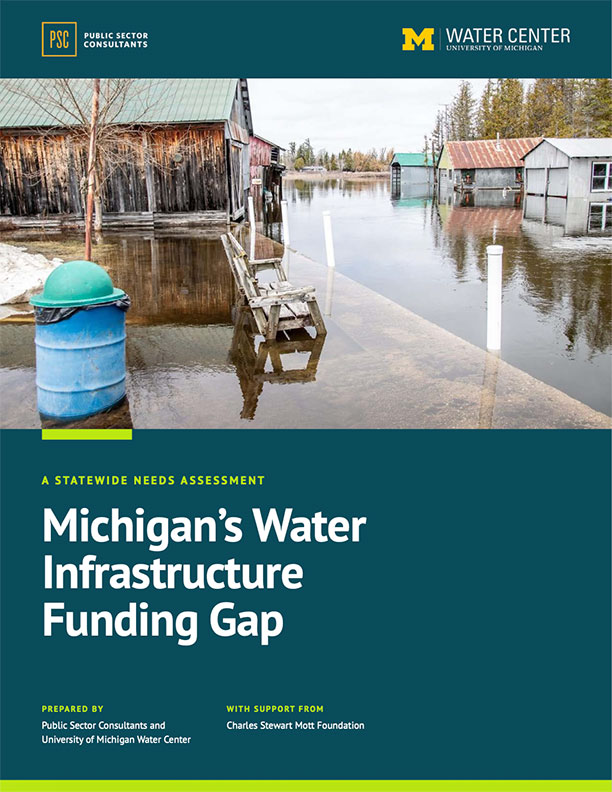
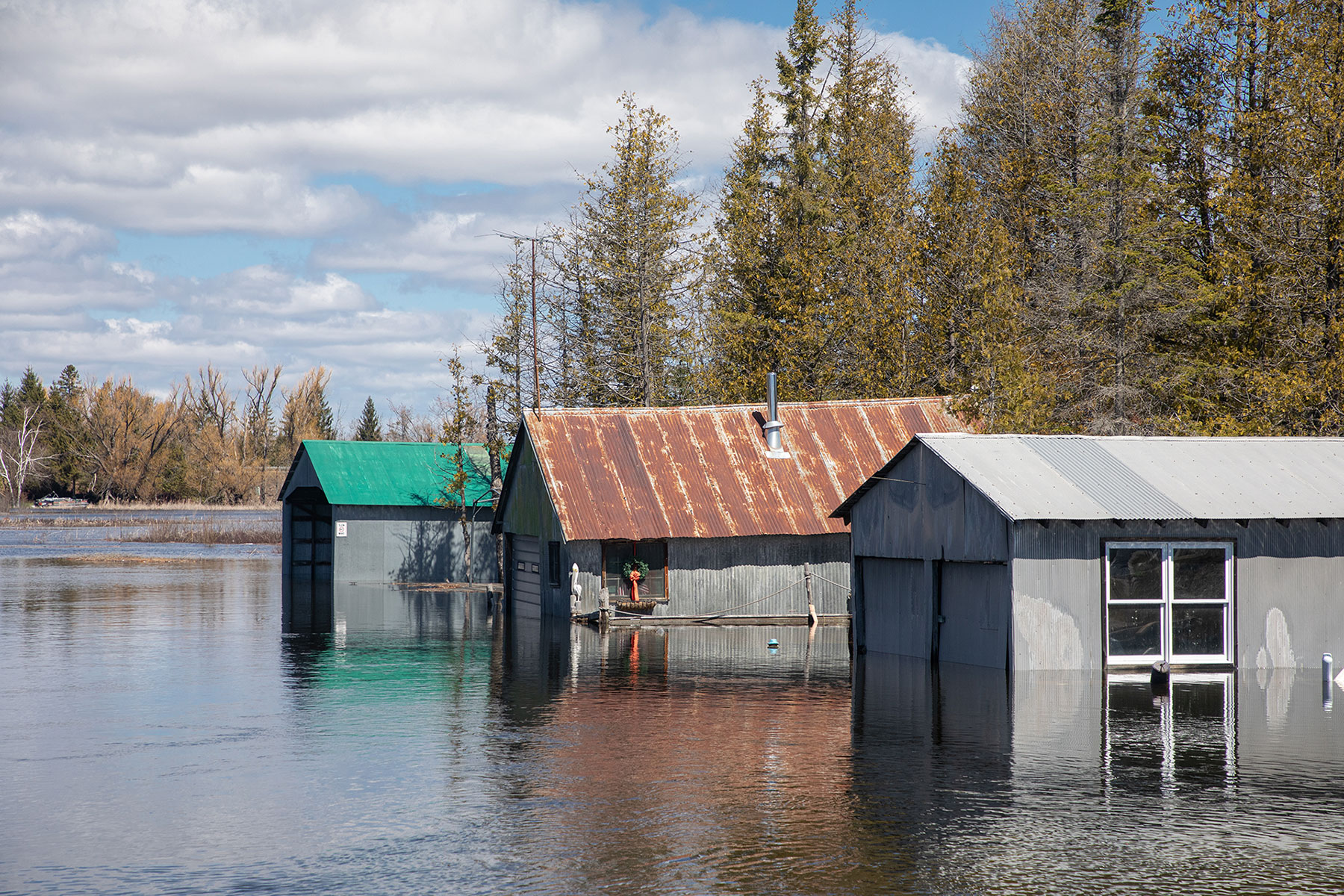
Michigan's Water Infrastructure Funding Gap: A Statewide Needs Assessment compiles more than 60 reports, surveys, and analyses into the first statewide inventory of water funding needs organized around the One Water framework, which treats water as one connected system from source to tap. It covers six categories: source water protection, private wells and septic systems, gray infrastructure, stormwater, water assistance, and dams.
The assessment finds that spending is not on pace to close the gap. Spreading the one-time capital need over 20 years plus ongoing costs, Michigan needs about $2.8 billion a year. Michigan communities have historically invested about $1.14 billion a year, less than half that amount.
Water needs from the report:
- Gray infrastructure: about $27.3 billion over 20 years: $16.26 billion for drinking water, about $9.1 billion for wastewater, and about $1.96 billion to replace roughly 245,000 lead service lines.
- Stormwater: $6 billion over 20 years, a conservative figure as heavier storms drive repeated flood disasters.
- Private wells and septic systems: $2.2 billion to replace about 130,000 failing septic systems, $676 million a year for ongoing replacement, and $600 million to test private wells for PFAS.
- Source water protection: about $2.5 billion to meet the State's 500,000-acre wetland restoration goal.
- Dams: $980 million to rehabilitate Michigan's assessed dams.
- Water assistance: $181 million a year to help about 395,000 qualifying households afford their water bills.
Demand is broad and bipartisan. For the FY 2027 budget, 78 of 148 legislators, from both parties and representing 42 of 83 counties, requested about $1.02 billion for 125 local water projects. Water system needs were the top requested item from local governments. The final budget funded $27.9 million, less than 3 percent of the amount requested.
The true number is higher. No statewide assessment exists for the condition of the private wells that serve about 1 million households, for most source water protection needs, or for flood mitigation and green stormwater infrastructure. Each of those gaps would add to the total.
The Charles Stewart Mott Foundation funded the report to support a request from the Michigan State Senate Appropriations Committee for nonpartisan education, analysis and recommendations on the state and condition of Michigan’s water infrastructure and related funding needs.
About Public Sector Consultants: Public Sector Consultants is a Lansing-based, nonpartisan research and consulting firm that helps public, nonprofit, and philanthropic clients make informed decisions on policy issues, including water, energy, health, and education. Learn more at publicsectorconsultants.com.
About the Charles Stewart Mott Foundation: Automotive pioneer Charles Stewart Mott established the private charitable foundation that bears his name in 1926 in Flint, Michigan. The Mott Foundation supports and works with organizations in its hometown of Flint and communities around the world to promote a just, equitable and sustainable society. It makes grants to nonprofit organizations working in four areas of interest: the Flint area, youth engagement, environment and civil society. In 2025, the Foundation made 396 grants totaling more than $161 million. For more information, visit mott.org.