Program: U-M Water Center
Program details » | All U-M Water Center projects »
“We’ll never make the future what we want unless we analyze what has happened in the past.”
The Great Lakes are “great” for many reasons: they hold 20% of the world’s surface freshwater, provide drinking water to more than 40 million people, support millions of jobs in fishing, shipping, tourism, and recreation, drive a regional economy worth trillions of dollars, and are home to thousands of species of plants and animals. The Great Lakes are essentially the backbone of an entire region, yet they were not always treated as such. By the 1960s, the damage was impossible to ignore. The Great Lakes faced a wide range of issues, and people knew a major change was needed. Despite this recognition, policy lagged behind. Finally, in 2010, the Great Lakes got what they deserved: the Great Lakes Restoration Initiative, or the GLRI.
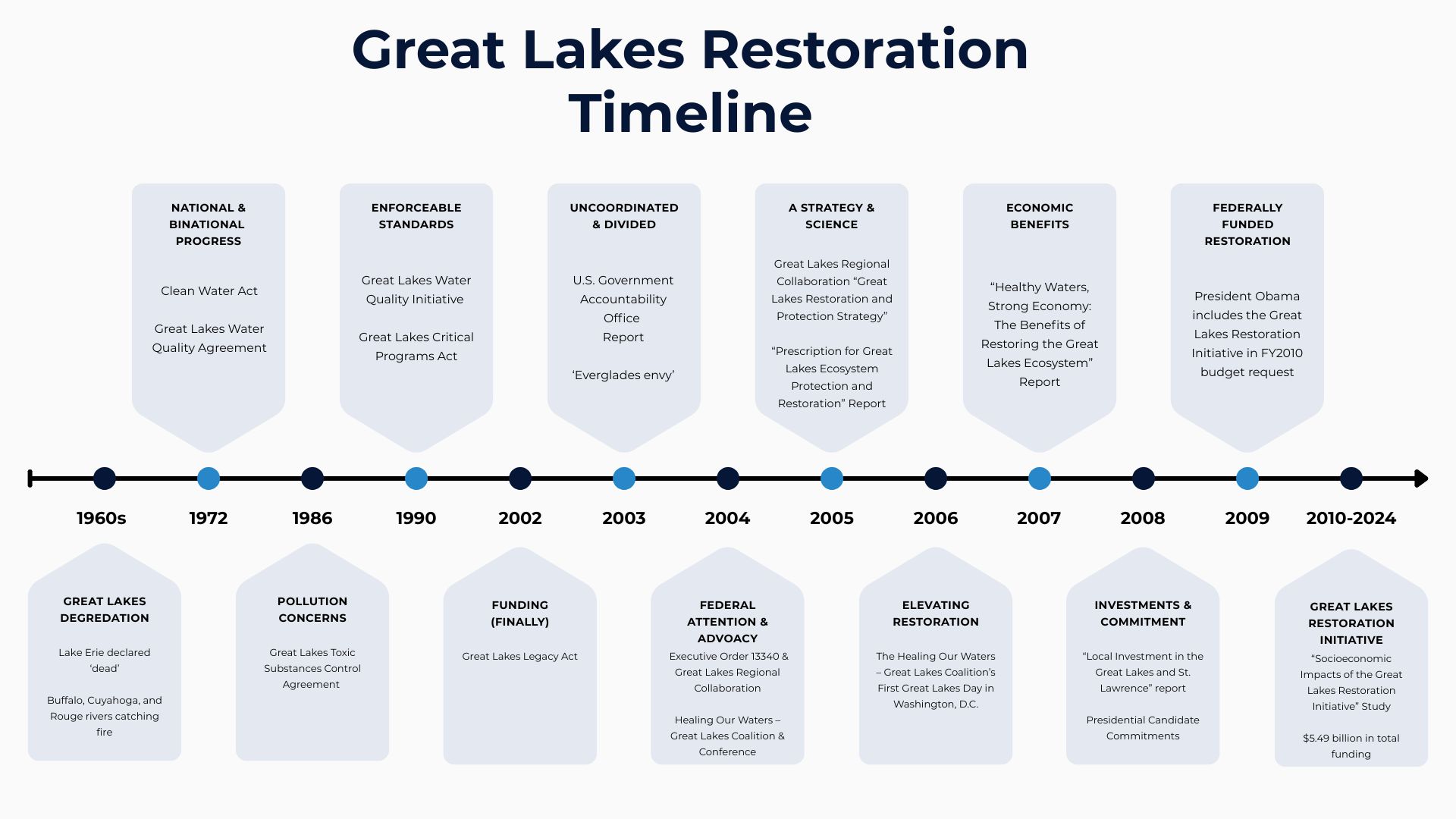 View the Great Lakes Restoration Timeline
The GLRI is widely considered one of the most successful and most well-regarded conservation programs in the United States, funneling over $5.49 billion in federal funds into thousands of projects across the Great Lakes watershed. The GLRI protects and restores the world’s largest surface freshwater ecosystem, yielding innumerable environmental, economic, public health, and recreational benefits. The GLRI’s journey from concept to implementation is the result of decades of strategic, coordinated efforts. This study is the first in-depth analysis of the GLRI’s history and lessons learned, bringing together the stories of key actors who contributed to the program’s creation and durability. Primary and secondary document analysis, as well as in-depth perspectives from 82 interviews, are utilized to provide a comprehensive overview of the GLRI’s history, drawing key lessons for the future of Great Lakes restoration and other restoration efforts around the world.
Key Findings and Lessons
The formation, implementation, and evolution of the GLRI came about through eight converging forces:
- Mobilizing Cultural & Regional Identity: Advocates are driven by their love, appreciation, and shared sense of identity for the Great Lakes to support restoration.
- Laying Legislative & Federal Groundwork: Clearing legislative hurdles lessened further ecological harm in the Great Lakes and cleared a path for federally funded restoration to become a priority.
- Convening & Planning: Key leaders brought stakeholders together and set an example for others to cultivate support for Great Lakes restoration.
- Modeling Success from Other Initiatives: Advocates drew lessons from restoration efforts in the Everglades and the Chesapeake Bay to inform Great Lakes coalition building and the effort toward federal restoration funding.
- Building a Broad & Diverse Coalition of Allies: NGOs, foundations, businesses, Tribal representatives, elected officials, and local, state, and regional agencies united into a collaborative and bipartisan support network that has advocated for federal restoration funding and protected the GLRI’s legacy.
- Communicating Clear & Compelling Messages: Great Lakes advocates developed a clear, consistent, and compelling case for restoration that has legitimized the region’s restoration funding needs.
- Leveraging Intra-Governmental Collaboration & Coordination: Collaborative communication networks between Great Lakes governing bodies aided in the GLRI’s consistency, efficacy, and adaptability.
- Capitalizing on Political Opportunity: Great Lakes advocates capitalized on the 2008 election, which elevated Great Lakes restoration as a national priority and put the region’s restoration plan into action.
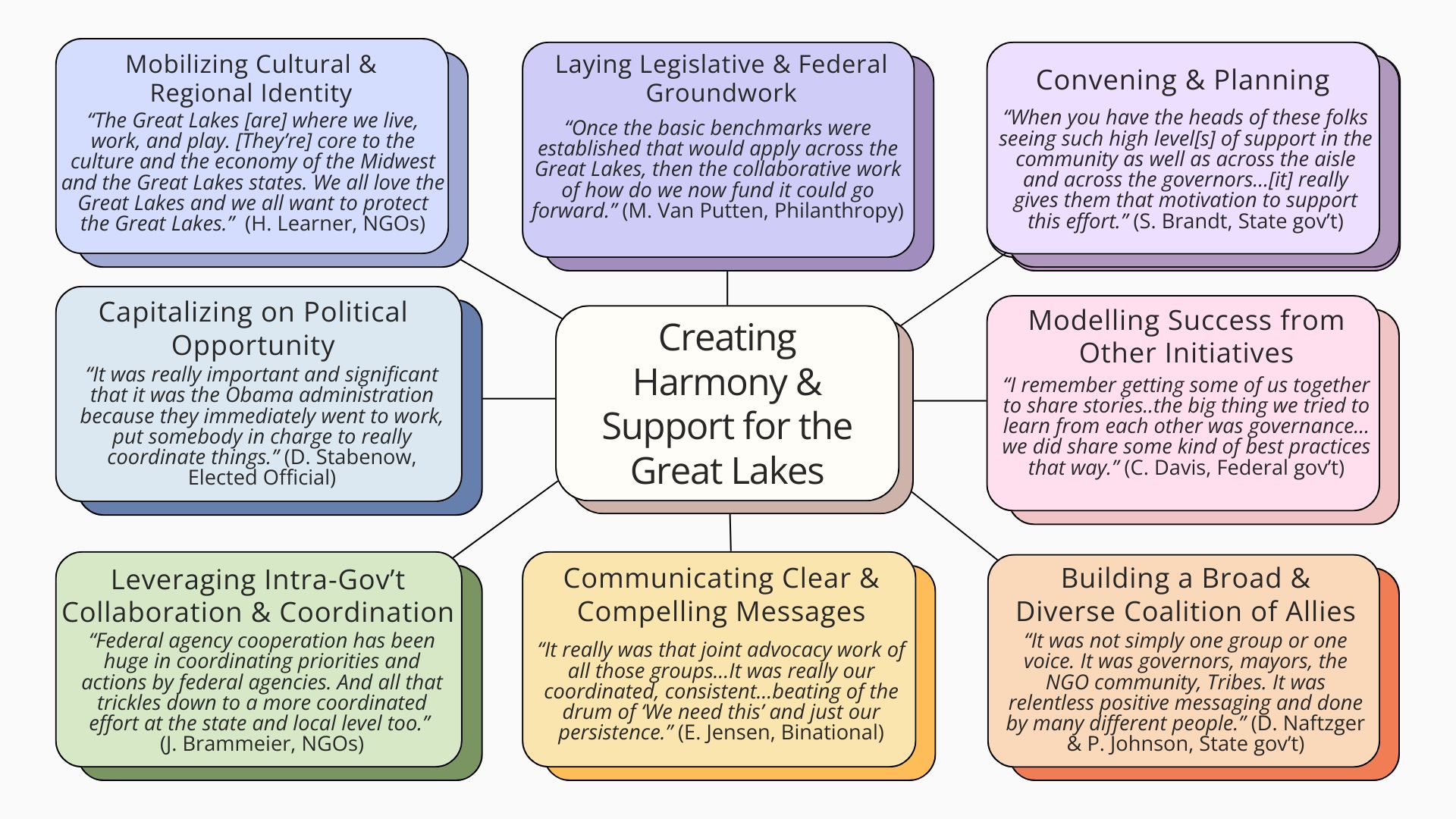
Enduring environmental initiatives are rarely a product of isolated actions or political opportunities. Rather, they are a result of a sustained convergence of culture, advocacy, leadership, strategy, and funding. Although the Great Lakes region has unique characteristics that helped elevate Great Lakes restoration to a national priority, there are many highly transferable strategies within the GLRI’s history that can be applied to a diverse array of regions.
All interviews and collected materials will be archived at the University of Michigan’s Bentley Historical Library, creating the first permanent and comprehensive record of the GLRI. This project marks the first phase of a larger initiative to analyze the history of GLRI and document the importance of this program.
People
Chrysi Beltsos is an MS candidate specializing in Sustainable Systems at the University of Michigan School for Environment and Sustainability.
Camryn Hurley is an MS candidate specializing in Environmental Policy & Planning and Behavior, Education, and Communication at the University of Michigan School for Environment and Sustainability.
Emma Kubitz is an MS candidate specializing in Environmental Policy & Planning and Environmental Justice at the University of Michigan School for Environment and Sustainability.
Olivia LaForce is an MS candidate specializing in Environmental Justice and Behavior, Education, and Communication at the University of Michigan School for Environment and Sustainability.
Will Tschetter is an MS candidate specializing in Ecosystem Science & Management at the University of Michigan School for Environment and Sustainability.
Mike Shriberg (advisor) is director of the University of Michigan Water Center at the Graham Sustainability Institute, where he provides strategic and programmatic leadership to advance collaborative research that informs policy and management decisions affecting the Great Lakes, estuaries, and coastal waters. He is also a professor of practice and engagement at the University of Michigan School for Environment & Sustainability.
Marc Gaden (advisor) is executive secretary of the Great Lakes Fishery Commission, a binational, treaty-based organization that works to improve and perpetuate the fishery that Canada and the United States share. He is also an adjunct assistant professor at the University of Michigan School for Environment and Sustainability.
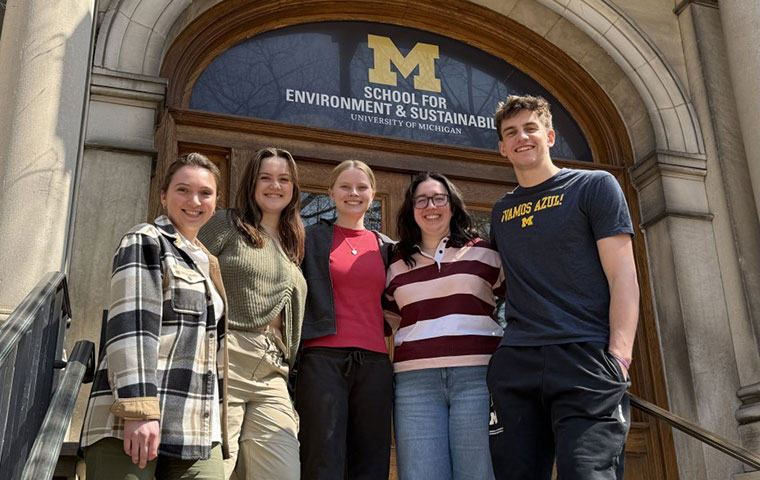
Pictured from left: Chrysi Beltsos, Emma Kubitz, Olivia LaForce, Camryn Hurley, Will Tschetter
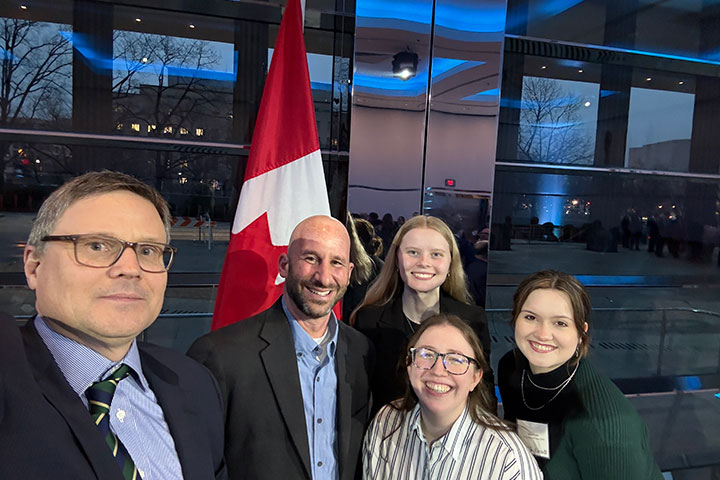
Pictured from left: Marc Gaden, Mike Shriberg, Olivia LaForce (background), Camryn Hurley (foreground), Emma Kubitz
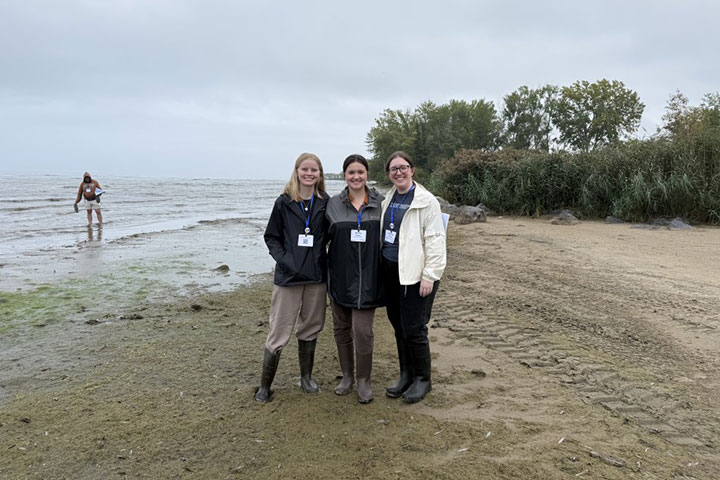
Pictured from left: Olivia LaForce, Emma Kubitz, Camryn Hurley
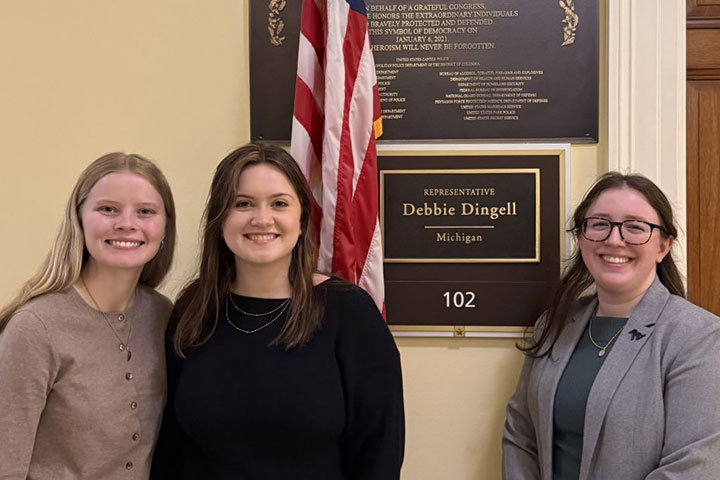
Pictured from left: Olivia LaForce, Emma Kubitz, Camryn Hurley
Joel Brammeier (client contact), Alliance for the Great Lakes President and CEO
Andrew Buchsbaum, Lecturer at the University of Michigan Law and former National Wildlife Federation Great Lakes Office and Action Fund Director
Cam Davis, former Great Lakes Czar (Obama Admin) (2009-2017)
Dave Dempsey, For the Love of Water (FLOW) Senior Advisor
Tim Eder, C.S. Mott Foundation Program Officer
Frank Ettawageshik, United Tribes of Michigan Executive Director
Molly Flanagan, Erb Family Foundation Great Lakes Senior Program Officer
Simone Lightfoot, Light Green Energy Founder and former National Wildlife Federation Associate Vice President of Climate Justice and Environmental Justice
David Ullrich (chair), former Great Lakes and St. Lawrence Cities Initiative Executive Director
Mark Van Putten, former Wege Foundation President and CEO, former CEO of the National Wildlife Federation
Partners