The Great Lakes region has a long history of reacting to crises after they arrive—whether invasive species, toxic contamination, water infrastructure failures, or governance breakdowns that leave communities scrambling. Too often, these responses result in lasting ecological damage, social harm, and diverted resources.
The University of Michigan Water Center is working to change that.
The Water Center has launched the Great Lakes Horizon Initiative (GLHI) with support from a 12-month, $610,000 grant from the Fred and Barbara Erb Family Foundation as well as from private donors. The Foundation recently committed $5.85 million across the region to strengthen Great Lakes protection through research, policy, and community leadership. GLHI builds on this momentum, helping the region anticipate emerging environmental, social, and governance challenges before they become crises.
“Uncertainty is increasing and change is accelerating across the Great Lakes, but we don’t have to be caught off guard,” said Mike Shriberg, Water Center director and faculty member in the School for Environment & Sustainability. “This initiative is about helping the region look ahead, identify early warning signs, and prepare collectively and strategically for what’s coming.”
Scanning the Horizon
At the heart of GLHI is a Great Lakes Horizon Scan, a structured process for identifying emerging environmental, social, economic, and governance issues, including those not yet widely visible. Horizon scanning focuses on early signals of change and translates them into actionable insights for decision makers.
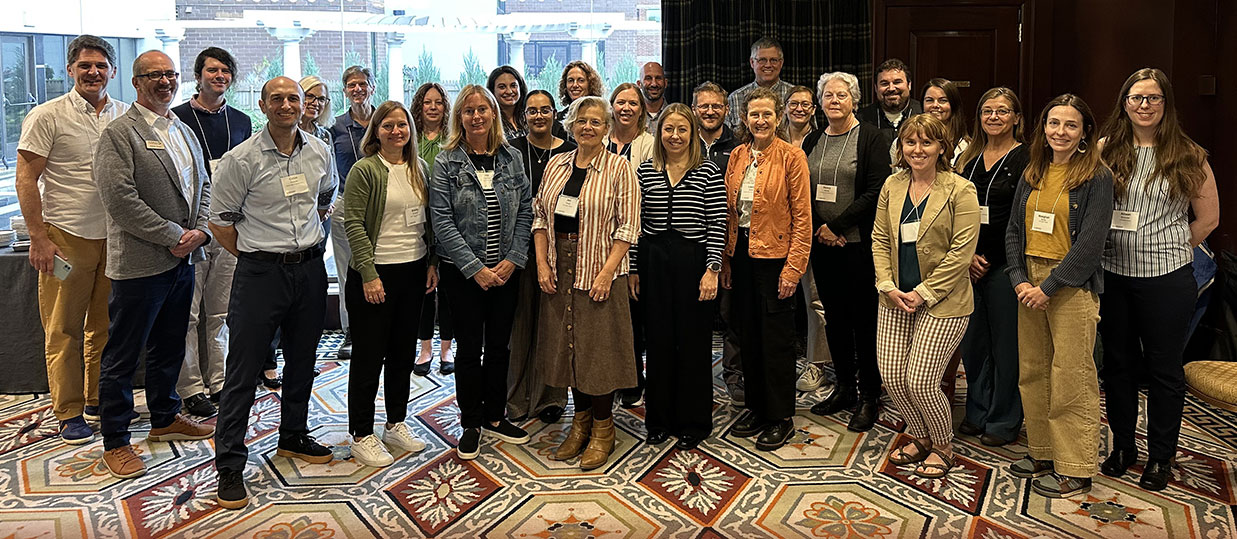
Following a successful pilot workshop convened in October 2025, the Water Center will lead a full regional horizon scan in 2026. The effort will draw on surveys, interviews, focus groups and a review of the literature to produce a vetted list of priority issues on the horizon, along with action agendas to help the region respond proactively.
Rethinking Great Lakes Governance
GLHI also addresses a longer-term challenge: the future of Great Lakes governance. Many of the region’s management systems were designed more than a century ago for a very different ecological and political reality. As federal scientific capacity and environmental protections face growing strain, the Water Center will engage governments, Tribes, nonprofits, industry, and frontline communities in an initial discussion about a more effective, equitable, and resilient governance approach—one ready to advance when opportunities arise.
Reconnecting Science and Action
A third pillar of the initiative is the relaunch of the Healing Our Waters–Great Lakes Coalition’s Science Advisory Board, reconnecting leading natural and social scientists with the region’s nonprofit community. The advisory board will strengthen the scientific foundation of policy priorities, support rapid responses to emerging threats, and improve access to credible, actionable science for decision makers.
Assessing the Loss of Science Capacity
The initiative also addresses a growing concern across the basin: the erosion of Great Lakes science capacity. The Water Center has partnered with the International Association for Great Lakes Research (IAGLR) to assess losses in science funding, staffing, data systems, and workforce development programs.
"Developing evidence-based estimates of research capacity loss is of interest to many organizations working at the binational level in the Great Lakes region," said Jérôme Marty, executive director of IAGLR. “The association will help to assess not only the direct cuts to funding and employees, but also to other programs, such as internships and scholarships, that rely on federal funds to train future leaders.”
Looking Ahead
The Great Lakes Horizon Initiative emphasizes inclusive engagement, working directly with impacted communities. By shifting from reaction to anticipation, GLHI aims to help the region prepare for challenges before they escalate, supporting a resilient, thriving Great Lakes for generations to come.
About the University of Michigan Water Center
The U-M Water Center addresses critical and emerging water resource challenges by fostering collaborative, user-driven research that informs policy and management decisions affecting our waters.
About the Fred and Barbara Erb Family Foundation
The Fred and Barbara Erb Family Foundation, founded in 2008, envisions a flourishing, healthy, and resilient Great Lakes ecosystem and a culturally vibrant, sustainable Southeast Michigan. Toward this end, the Foundation strengthens the cultural and environmental organizations that share its vision to make this a reality for generations to come. The Foundation will conclude its grantmaking by 2034. For more information about its spenddown, please visit erbff.org.
About the International Association for Great Lakes Research (IAGLR)
The International Association for Great Lakes Research (IAGLR) is a global scientific community dedicated to studying and stewarding the world’s great lake ecosystems. Founded in 1967, IAGLR brings together a diverse network of researchers, educators, policy makers, practitioners, and Indigenous Knowledge holders who collaborate to advance understanding, inform sustainable management, and protect large lake ecosystems worldwide. Through conferences, publications, and outreach, the association nurtures interdisciplinary dialogue and the integration of multiple knowledge systems to safeguard these vital freshwater resources. Learn more at iaglr.org.