Clearing the Air: U-M and Okanogan Communities Take on Wildfire Smoke
Clearing the Air: U-M and Okanogan Communities Take on Wildfire Smoke
Clearing the Air: U-M and Okanogan Communities Take on Wildfire Smoke
Program: Catalyst Grants
Program details » | All Catalyst Grants projects »
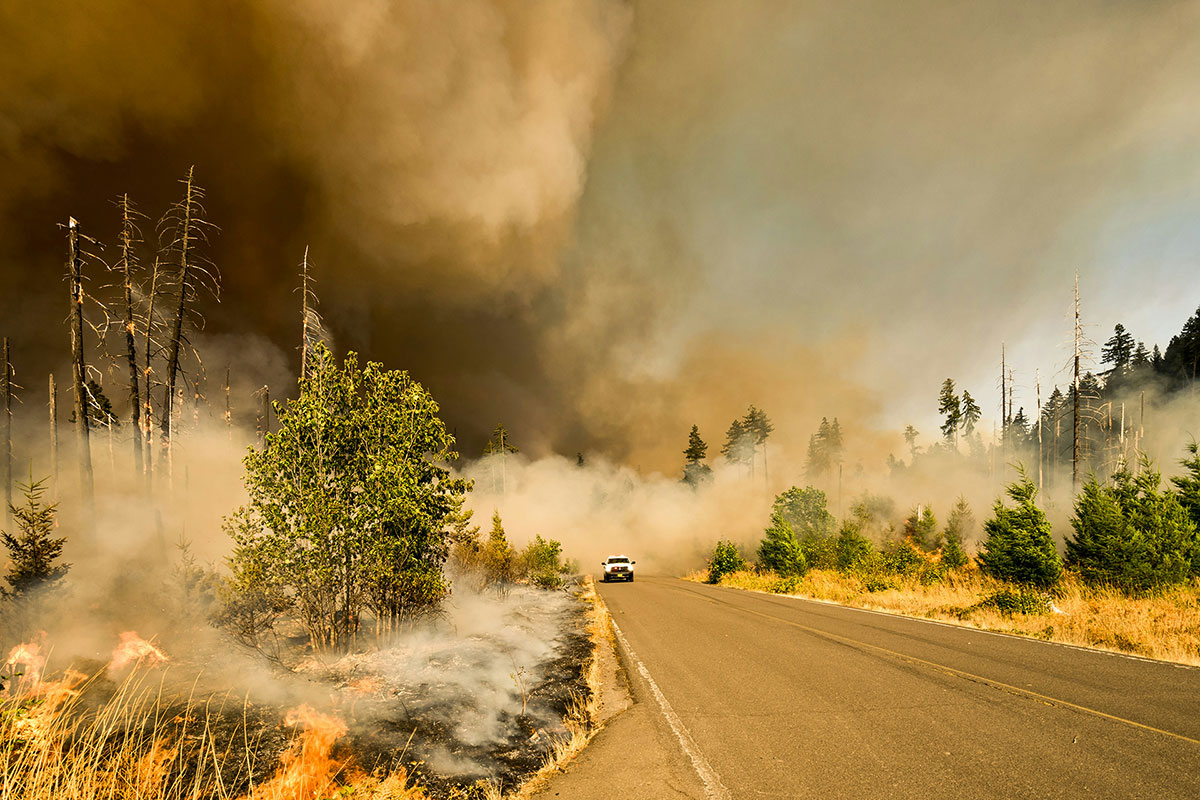
As climate change drives hotter, drier conditions, wildfires are becoming more frequent and severe, making smoke an escalating public health threat. Fine particulate matter penetrates deep into the lungs and bloodstream, affecting respiratory, cardiovascular, and neurological health. By 2050, wildfire smoke could contribute to more than 70,000 excess deaths annually in the U.S., with global premature mortality exceeding 650,000 per year.
Rural communities in the northwestern U.S. face heightened vulnerability. Smoke can become trapped by local topography, outdoor work increases exposure, and limited healthcare access, poverty, and other social factors amplify risk. Residents’ daily responsibilities often limit their ability to respond, and coordinated planning for smoke events is scarce.
This research team is partnering with the Okanogan River Airshed Partnership (ORAP)—a coalition of tribal, local, state, and federal partners—to co-create practical resources for community response. Building on NASA-funded research, the team will develop a Wildfire Smoke Protective Action Guide for residents and outreach materials for policymakers. Students from U-M’s Stamps School of Art & Design will help make materials accessible and engaging.
By integrating local knowledge with expertise in Public Health, Environment & Sustainability, Nursing, Psychology, and Art & Design, this project will strengthen community capacity, encourage adaptive behaviors, and offer a replicable model for rural areas confronting extreme wildfire smoke.
Project team: Simone Charles, PI (SPH), Joseph Trumpey, co-I (Stamps), Alexandra Paige Fischer, co-I (SEAS), Megan Czerwinski, co-I (Nursing), Caroline Beckman, co-I (SEAS), Dani Grant, co-I (SEAS), Elijah Loftis (Okanogan Conservation District), Dana Golden (Methow Valley Citizens' Council), Elizabeth Walker (Clean Air Methow)
This project is funded by the U-M Institute for Healthcare Policy and Innovation (IHPI), with generous support from Lewis G. Sandy, M.D., and Susan Hassmiller, R.N., Ph.D., FAAN.