Seeding Sustainability: Growing the Benefits of Michigan Hemp Production
Seeding Sustainability: Growing the Benefits of Michigan Hemp Production
Seeding Sustainability: Growing the Benefits of Michigan Hemp Production
Program: Catalyst Grants
Program details » | All Catalyst Grants projects »
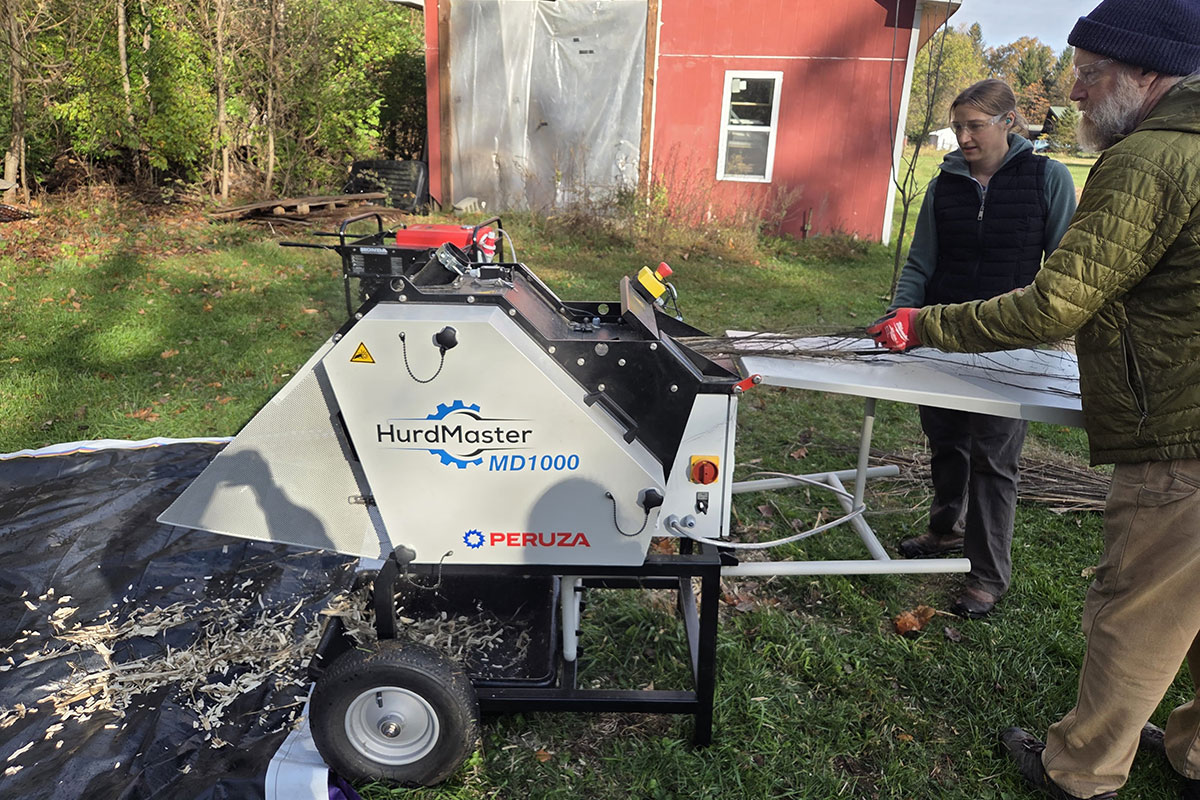
Michigan-grown hemp holds promise as a fast-growing, pest-resistant, carbon-sequestering crop, capable of capturing 2–3 tons of carbon per acre and locking it into long-lasting products. Yet farmers often lack the tools and infrastructure to efficiently turn their harvests into high-value materials, and research gaps remain in optimizing processing methods.
This team is partnering with Pott Farms to explore how hemp combined with mycelium—a natural fungal network—can create durable, biodegradable materials for furniture, packaging, and building components. A key step is decortication, which separates the plant’s fibers from its woody core. Pott Farms, home to one of the few portable decorticators in the United States, will serve as a testbed to study how different processing methods affect material strength and carbon-storage potential. Graduate students will contribute by helping transform these experiments into furniture prototypes.
Pott Farms has long worked to lower barriers for Michigan hemp farmers seeking to produce hemp-based products. By collaborating closely with the farm, the team can develop practical guidance for small- and mid-scale growers to maximize crop value. Combining local farming expertise with hands-on research in materials and design, the project will demonstrate sustainable production that supports farmers, fosters environmentally responsible products, and inspires future innovations in regenerative materials.
Project team: Evgueni T. Filipov, PI (Civil and Environmental Engineering), Glenn Wilcox, co-I (Taubman College), Robbin Pott (Pott Farms), Vaibhavi Chidella (Civil and Environmental Engineering)