Clean Streams: Boosting Recycling with Technology
Clean Streams: Boosting Recycling with Technology
Clean Streams: Boosting Recycling with Technology
Program: Catalyst Grants
Program details » | All Catalyst Grants projects »
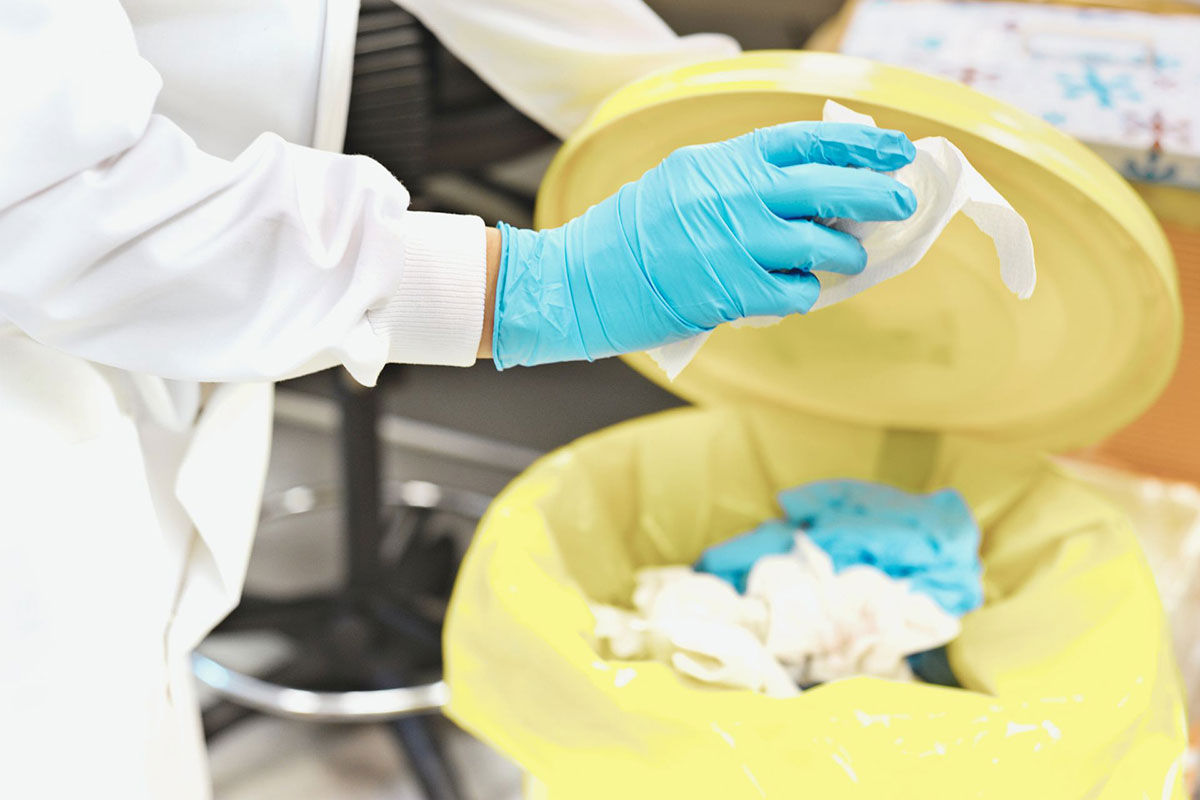
Modern waste systems in hospitals, campuses, and public spaces face a pressing sustainability challenge: recyclable materials are often compromised by residues, moisture, chemicals, and misplaced items, turning entire waste streams into unusable trash. Contamination in institutional bins frequently exceeds 20–30%, forcing facilities to discard materials that could otherwise be recycled. Even thin moisture films, food residues, and transparent plastics can spoil whole batches, and visual inspection alone cannot reliably detect them.
This project will develop an intelligent, contamination-aware sensing system capable of identifying invisible residues and misplaced items in compost, recycling, and medical plastics streams. A compact robotic arm will integrate RGB-D, hyperspectral, and thermal sensors to capture complementary visual, spectral, and thermal cues. AI models will fuse these data streams to flag problematic items before they enter waste streams. By enabling early, on-site detection, the system is expected to improve material recovery, reduce unnecessary disposal, lower transport emissions, and strengthen circular material use.
Initial work will define sensor requirements, collect contamination data, and demonstrate a prototype capable of detecting thin films, grease, oils, and misplaced plastics. U-M Health partners, including sustainability and environmental health specialists, will provide real waste samples, operational insight, and guidance on practical deployment. Developing and testing this system will lay the groundwork for future autonomous sorting technologies, improve recycling efficiency, and advance climate-health goals across campus and healthcare environments.
Project team: Karishma Patnaik, PI (CECS, UM-Dearborn), Alireza Mohammadi, co-I (CECS, UM-Dearborn), Krisanu Bandyopadhyay, co-I (CASL, UM-Dearborn), Chip Amoe (UM-Health), Christopher Victory (UM-Health), Steven Keckan (UM-Health)
Resources:
- WasteSep: Multi-Modal Waste Classification and Routing [Project Website]